
|
||
|
|
||
|
||
|
Romance Fraud |
||
|
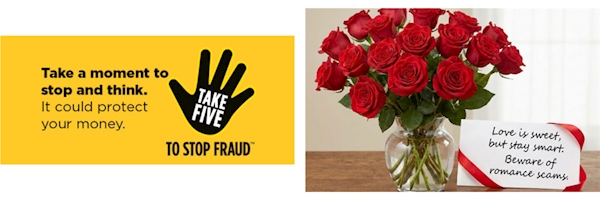
Romance fraudsters and looking for love… A dating scam, or romance fraud, typically occurs when you enter into an online relationship with a fraudster posing as an imaginary person. After grooming you over a period of days, weeks or months, the fraudster will begin to ask for money for completely fictional reasons and ask for more and more over time.
The National Crime Agency (NCA) estimates that only 14% of fraud cases are reported due to the emotional impact of romance fraud.
1. An entirely online relationship Meeting someone online is normal. What’s not, however, is the relationship existing entirely online and you never meeting up with them in person, not even via a video call. This should raise a red flag, especially if a significant amount of time has passed. Romance fraudsters typically use stolen images of real people, or increasingly, AI-generated images to pretend to be someone they're not, so this should be treated with suspicion.
2. Using stolen images Fraudsters carry out romance scams by creating fake personas, and part of that persona involves images of real or fake people. With AI scams on the rise, scammers are also generating entirely fake images of people to use in their schemes. You can use Google image search to trace images of people to other places on the internet, or a tool like TinEye – just upload the screenshot and see if the image belongs to someone else.
3. Overly dramatic stories Anyone that you’re speaking to online who always has something devastating happen to them – from losing access to their bank account to experiencing several bereavements to having their home burgled – should raise alarm bells and a red flag. During the grooming process, fraudsters will attempt to elicit empathy from you by telling you sob stories in an effort to extract money from you at a later date. This is also done to build an emotional connection with you, making you more likely to provide financial help when they ask.
4. Offering investment opportunities Once they've earned your trust, the scammer may change the conversation using claims that they can help you make easy money through exclusive trading offers or investment opportunities.
5. Asking for money or gifts This is typically the end result of the scam. Eventually, when the scammer has you convinced that you're in a real romantic relationship, they’ll use one of their stories to persuade you to part with your money. Sometimes, fraudsters will ask you for several amounts of money over time under the guise of various fake scenarios. Alternatively, the scammer may ask you to move money for them by using your bank account to transfer money into and then out of again, this is a form of money laundering, used to move illicit cash.
What to do if you've been targeted by a romance scammer If you think you could be speaking to a romance scammer on a dating app or a social media website, you should report the profile to the platform using its in-app reporting tools. If you believe you may have been a victim of a scam, contact your bank or financial institution immediately. Report to Police Scotland directly by calling 101 or online via Contact Police Scotland - Police Scotland Every report assists police investigations, provides intelligence, informs national alerts that protect all communities, disrupts criminals and reduces harm. In the UK you can forward scam text message to OFCOM on 7726 (free of charge), and forward suspicious emails to report@phishing.gov.uk
#northeastcrimereduction
This messaging system is not for reporting crime as responses are not monitored 24/7. If you have time-critical information regarding the content of the above message, or if you wish to report any other non-urgent matter, please call 101. In an emergency, call 999.
| ||
Reply to this message | ||
|


|